Mur
porteur
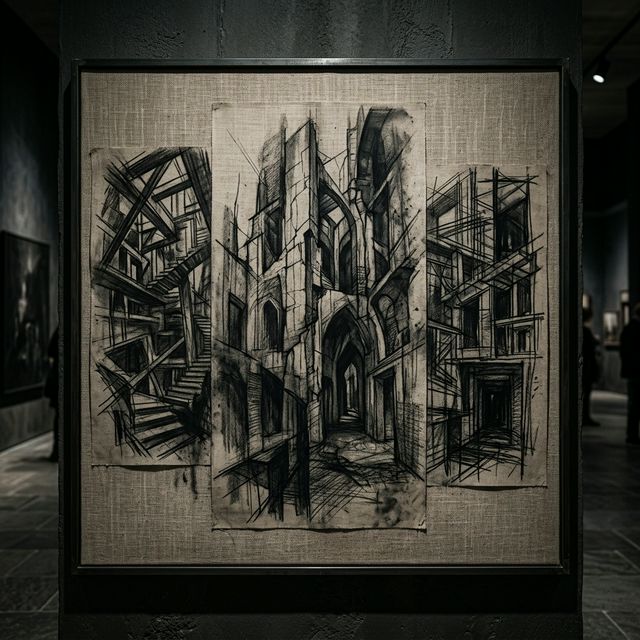
Three drawings of the same wall on three successive days. On the fourth day, the building was gone. The ink weighs differently on each panel.
I arrive before the machines
"I am interested
in what walls
remember."
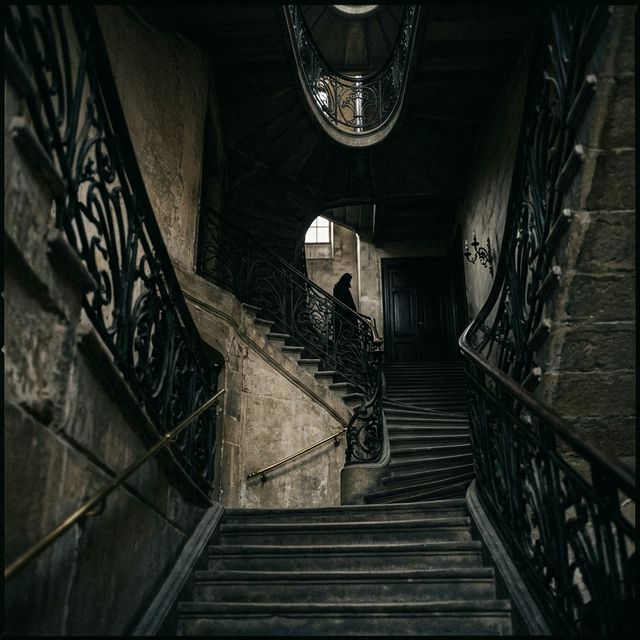
Not the people who lived inside them — that is what photography does. I am interested in the wall itself: its plaster, its load, its cracks that were filled and refilled over decades.
The ink I use is not metaphor. It is material. It has weight. It settles into the surface differently each time, the way sediment settles into a riverbed.
When a building is demolished in Beirut, it is not just a structure that disappears. It is a record of the city's negotiations with itself. My drawings are not elegies. They are cadastral documents.
I arrive before the machines. I draw until the light is gone. Then I leave. The drawing stays.
Three drawings of the same wall on three successive days. On the fourth day, the building was gone. The ink weighs differently on each panel.
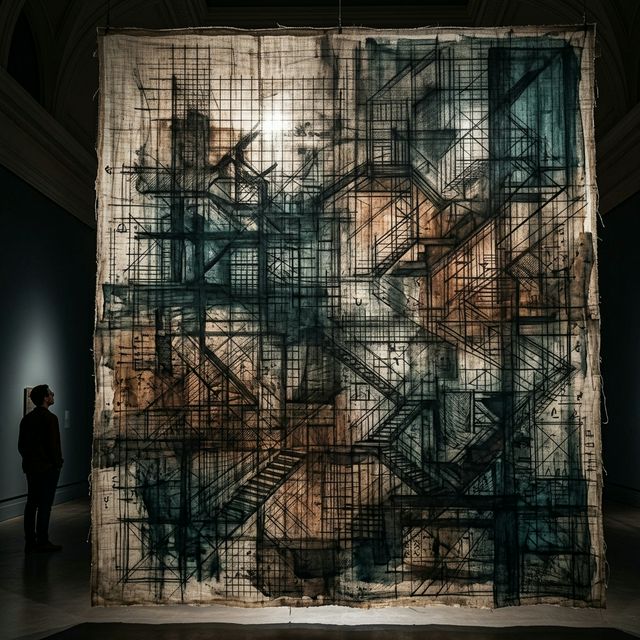
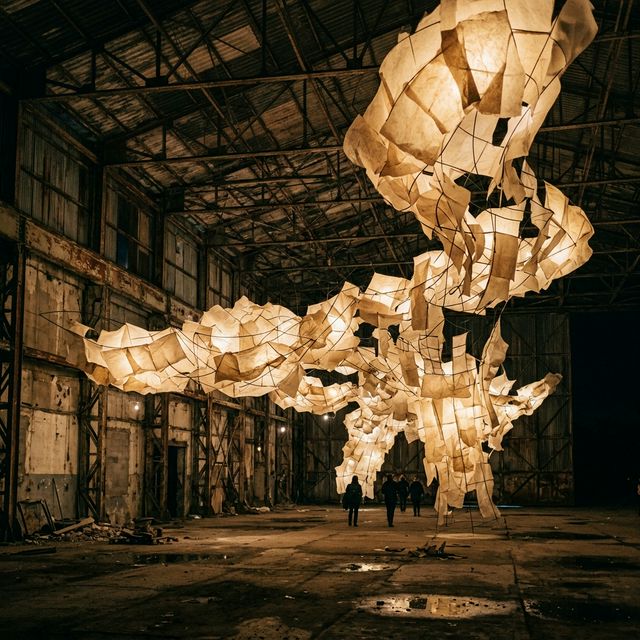
Seven hundred meters of translucent paper suspended through an abandoned hangar. A three-dimensional map of Beirut streets that no longer have names.
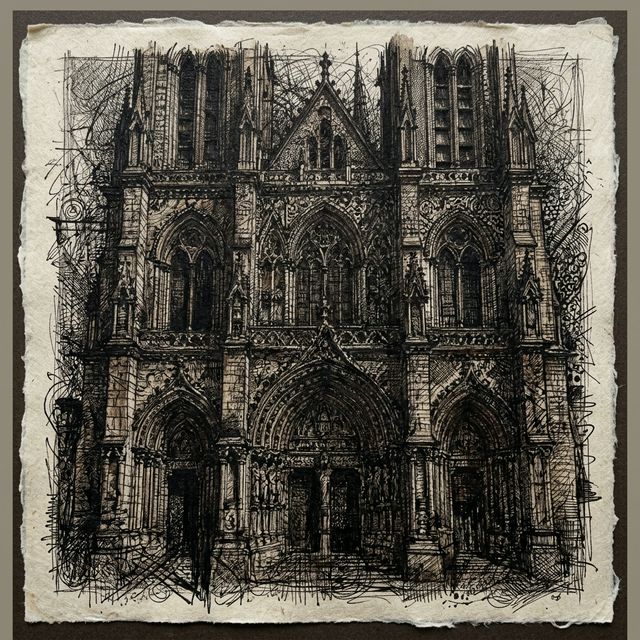
Twelve drawings of the same facade. Each sheet overdrawn one hundred and forty times. At a certain density of ink, the image disappears inside itself.
A stairwell filmed from below over six months at fifteen frames per second. The building was demolished at the end of the year. The film is the building's last record of itself.
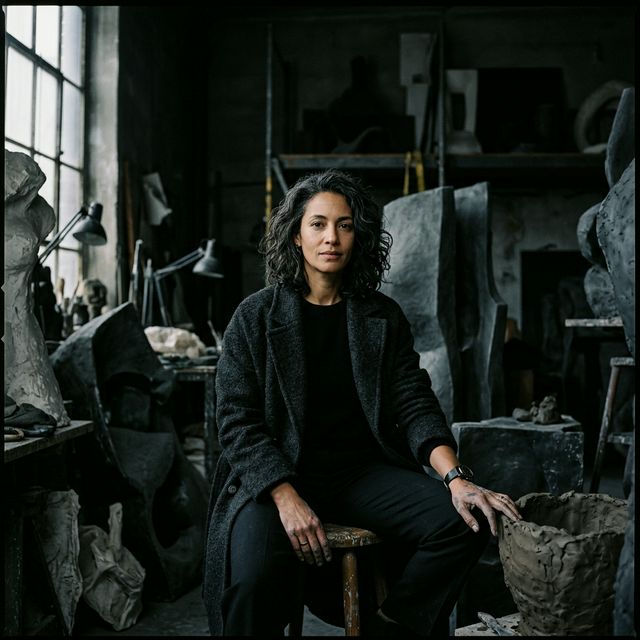
Mireille Kazan was born in Lyon in 1986 to a French father and a Lebanese mother. She studied at Villa Arson in Nice before completing a residency at the Lebanese Academy of Fine Arts in Beirut, where she has maintained a studio since 2011.
Her practice began in 2008, when the building in which her maternal grandfather had kept his architectural office for thirty years was demolished to make way for a commercial tower. She arrived that morning with ink and paper, not knowing yet that this would become her life's work.
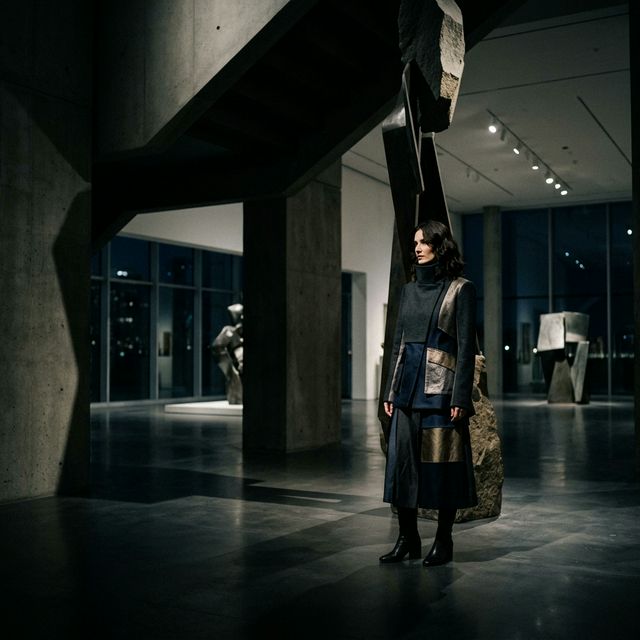
Her large-scale installations have been shown at Documenta 15, the Sharjah Biennial, Biennale de Lyon, and institutions across Europe and the Middle East.
Galerie Sfeir-SemlerBeirut / Hamburg
Galerie TanitMunich / Beirut